
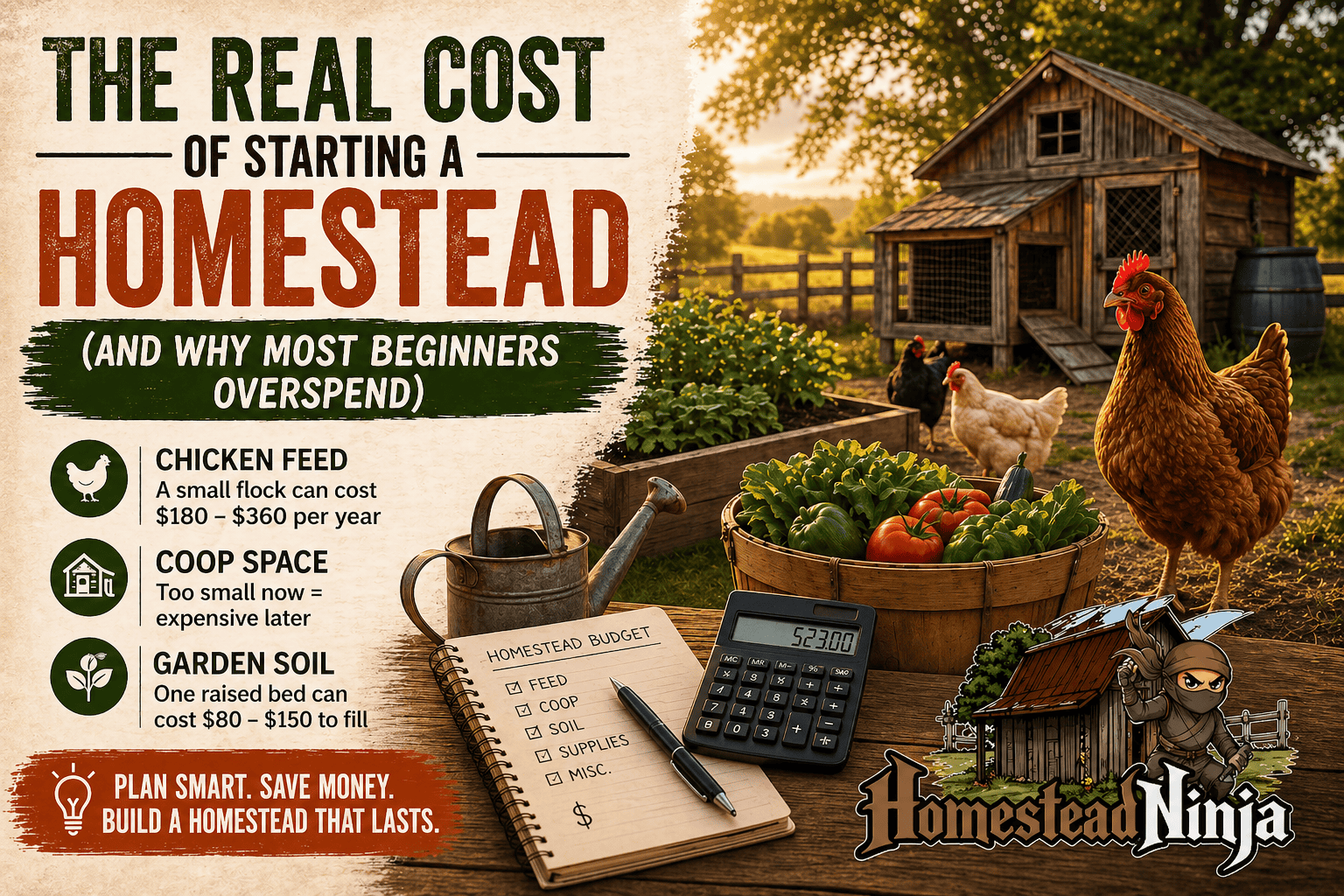
When I first started planning my own homestead setup, I quickly realized how easy it is to underestimate the real costs…
Starting a homestead sounds simple enough — raise a few chickens, grow some food, maybe build a small coop.
But what many beginners don’t realize is how quickly the costs can add up… especially when you’re guessing.
In fact, it’s not uncommon for new homesteaders to overspend by a few hundred dollars (or way more) in their first setup — not because they’re doing anything wrong, but because they’re missing a few key calculations upfront.
Here are three of the most commonly underestimated costs — and how to avoid them.
1. Chicken Feed: The Ongoing Cost That Adds Up Fast
Feed is one of the most overlooked expenses for new chicken owners.
On average, an adult laying hen eats about 0.25 pounds of feed per day. That doesn’t sound like much — until you scale it.
A small flock of 6 chickens will typically consume:
- About 1.5 pounds of feed per day
- Around 45 pounds per month
That’s essentially one full bag of feed every month.
Depending on your area, a 40–50 lb bag of feed can cost anywhere from $15 to $30+, meaning you could be spending $180 to $360 per year just on feed alone for a small flock.
And that’s before treats, supplements, or waste.
Many beginners underestimate this (I sure did) because they think in terms of “a little feed here and there,” rather than consistent daily consumption.
2. Coop Space: Underbuilding Leads to Costly Fixes
Another common mistake is underestimating how much space chickens actually need.
A good rule of thumb is:
- 3–5 square feet per chicken inside the coop
- 8–15 square feet per chicken in the run
For a flock of 8 chickens, that means:
- Around 32 square feet of coop space
- Around 80–120 square feet of run space
When people build too small, problems show up quickly:
- Pecking and aggression
- Stress and reduced egg production
- The need to expand or rebuild
And that’s where costs stack up — because fixing a coop is almost always more expensive than building it correctly the first time. Ask me how I know haha.
3. Garden Soil: The Hidden Expense Nobody Talks About
If you’re planning raised garden beds, soil might be the most surprising cost of all.
Let’s say you build a common raised bed:
- 4 feet by 8 feet
- 12 inches deep
That requires about 32 cubic feet of soil
If you’re buying bagged soil at $4–$6 per bag (1.5–2 cubic feet each), you could easily spend:
👉 $80 to $150 just to fill one bed
Multiply that by multiple beds, and you’re quickly into the hundreds.
Most beginners don’t realize this until they’re standing in The Home Depot doing the math in their head — or worse, halfway through filling the bed. Once again, ask me how I know. (I made BOTH mistakes, yes I am very hardheaded, ouch)
Why These Costs Catch People Off Guard
The common thread across all of these?
👉 Estimation.
Most people:
- Guess feed amounts
- Guess space requirements
- Guess soil needs
And those guesses almost always lead to overspending.
A Simple Way to Avoid Wasting Money
To help avoid these common mistakes, I created a set of simple calculators that estimate:
- How much feed your chickens will need
- How much coop and run space your flock requires
- How much soil you need for raised garden beds
Instead of guessing, you can plug in your numbers and get a clear estimate before you spend money.
👉 You can access them here:
Raised Bed Soil Calculator: Figure Out How Much Soil You Need
Chicken Feed Calculator: How Much Feed Do Your Chickens Need?
Chicken Coop Size Calculator: How Big Should Your Coop Be?
Final Thoughts
Starting a homestead doesn’t have to be expensive — but it does require a little planning.
A few quick calculations upfront can save you:
- Money
- Time
- Frustration
And most importantly, it helps you build a setup that actually works for you and your animals from day one.
To me, that is the most important thing 🙂